 how-to
How Much Down Payment for an FHA Loan
Last Updated: October 29, 2026
Quick Summary
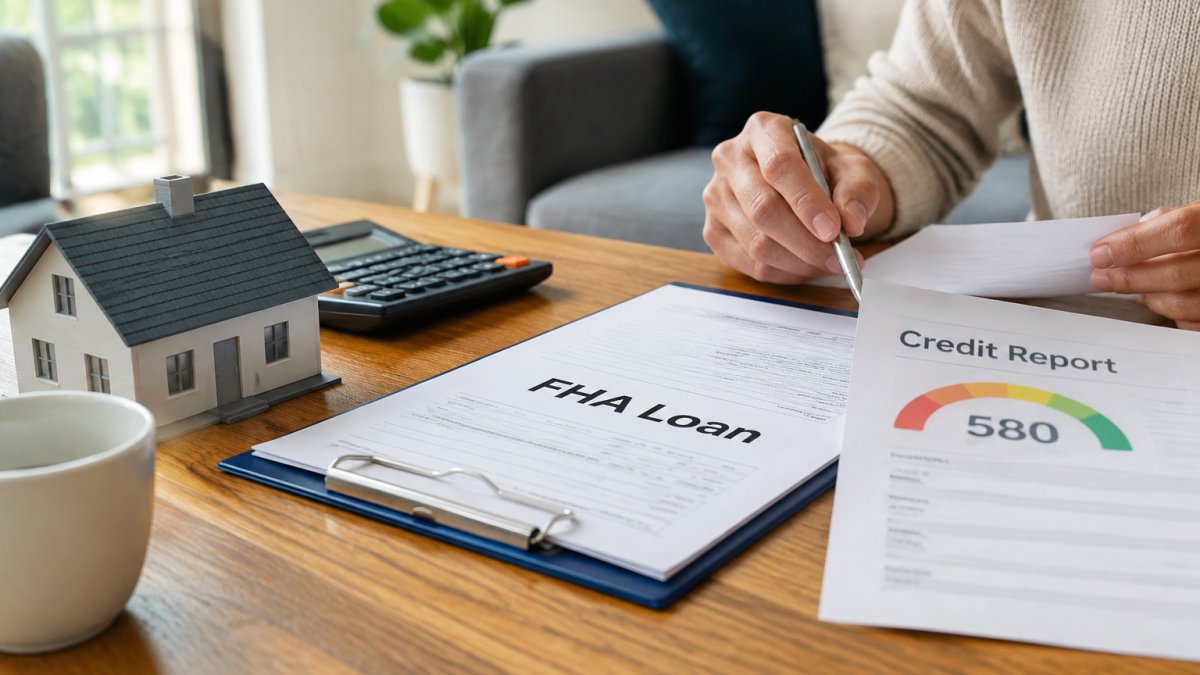
Most borrowers need just 3.5% down for an FHA loan down payment, provided their credit score is 580 or higher. Scores between 500 and 579 typically require 10% down, and closing costs are a separate cash expense.
- A credit score of 580 or higher qualifies you for the standard 3.5% minimum down payment.
- Scores between 500 and 579 typically need at least 10% down, and scores below 500 are generally ineligible.
- On a $350,000 home, moving from 3.5% to 10% down adds $22,750 to your cash needed.
- Closing costs typically run 2% to 5% of the purchase price and are separate from the down payment.
- Seller concessions and lender credits can cover closing costs but cannot replace the required minimum down payment.
Table of Contents
- How Much Down Payment Does an FHA Loan Require?
- Credit Score Thresholds and How They Change Your Down Payment
- FHA 3.5% Down Payment Examples at Different Purchase Prices
- Down Payment Versus Cash to Close: What You Actually Need at Closing
- Eligible Sources of FHA Down Payment Funds and Assistance Programs
- Estimating Your Monthly Payment With Mortgage Insurance
- Calculating Your FHA Down Payment Step by Step
- Booking a Pre-Approval to Find Your Exact Number
- Frequently Asked Questions
How Much Down Payment Does an FHA Loan Require?
Most first-time buyers can get an FHA loan down payment with as little as 3.5% down. This is one of the most common questions buyers in Broward, Miami-Dade, and Palm Beach counties ask.
An FHA loan is a government-insured mortgage backed by the Federal Housing Administration. Because the government insures the loan, lenders can accept lower down payments and more flexible credit standards than many conventional loans allow.
Here is what you need to know about the basic down payment rule:
- Minimum down payment: 3.5% of the purchase price for borrowers with a credit score of 580 or higher
- Lower credit scores: A higher down payment may be required for scores between 500 and 579
- Your total cash need: Closing costs and prepaid items are separate from the down payment
Keep in mind that the down payment is only one part of the cash you bring to closing. Our guide to FHA loan requirements for first-time buyers lists the full eligibility rules beyond the down payment.
Credit Score Thresholds and How They Change Your Down Payment
Your credit score is the single biggest factor in how much you put down.
Borrowers with a score of 580 or higher can usually qualify for the 3.5% minimum. Scores below that level often require a larger down payment and may limit which lenders will work with you.
Common credit score tiers look like this:
- 580 and above: Eligible for the standard 3.5% down payment
- 500 to 579: Typically needs at least 10% down
- Below 500: Generally not eligible for FHA financing
Every lender sets its own overlays, so a lender may ask for more than the FHA minimum.
FHA 3.5% Down Payment Examples at Different Purchase Prices
Seeing real numbers makes the rule easier to understand. The table below shows the 3.5% minimum down payment and the 10% down payment at several realistic purchase prices, plus a rough estimate of total cash to close so you can see the full picture rather than just the down payment line.
| Purchase price | 3.5% down (score 580+) | 10% down (score 500-579) | Estimated closing costs (2%-5%) | Rough cash to close at 3.5% down |
|---|---|---|---|---|
| $200,000 | $7,000 | $20,000 | $4,000-$10,000 | $11,000-$17,000 |
| $250,000 | $8,750 | $25,000 | $5,000-$12,500 | $13,750-$21,250 |
| $300,000 | $10,500 | $30,000 | $6,000-$15,000 | $16,500-$25,500 |
| $350,000 | $12,250 | $35,000 | $7,000-$17,500 | $19,250-$29,750 |
| $400,000 | $14,000 | $40,000 | $8,000-$20,000 | $22,000-$34,000 |
| $450,000 | $15,750 | $45,000 | $9,000-$22,500 | $24,750-$38,250 |
| $500,000 | $17,500 | $50,000 | $10,000-$25,000 | $27,500-$42,500 |
A few things to notice in that table:
- The 10% tier is not a small step up. At a $350,000 price, moving from 3.5% to 10% down adds $22,750 to the cash you need. That is why improving a credit score from the 500s to 580 or above is often the highest-return move a buyer can make before applying.
- Closing costs scale with the price. Lender fees, title work, appraisal, and recording fees typically land somewhere between 2% and 5% of the purchase price, though the exact figure depends on the lender, the title company, and local recording charges. The ranges above are estimates, not quotes.
- Loan limits cap the price you can finance. FHA loan limits are set annually by the Federal Housing Administration and vary by county (FHA Mortgage Limits). A purchase price above your county's limit cannot be financed with an FHA loan, so check the current limit for your county before you fall in love with a listing.
Notice that the down payment rises with the price of the home. A small change in the purchase price can shift the amount you need to save by several hundred dollars. Plan your budget around the actual home prices you are considering, not a general average.
Down Payment Versus Cash to Close: What You Actually Need at Closing
Many buyers confuse the down payment with the total cash they need at closing. These are two different numbers, and the difference can surprise you.
The down payment is the portion of the purchase price you pay yourself.
A rough breakdown looks like this:
- Down payment: 3.5% of the purchase price
- Closing costs: Lender fees, title work, appraisal, and recording fees
- Prepaid items: Insurance and property tax escrow deposits
Ask your loan officer for a Loan Estimate early in the process. This standard form shows your expected cash to close so you are not surprised on closing day.
Eligible Sources of FHA Down Payment Funds and Assistance Programs
You do not always have to pay your down payment entirely from savings. FHA rules allow several sources of funds, but the rules draw a sharp line between money that can count toward your required minimum investment and money that can only cover closing costs. Getting that distinction wrong is one of the most common and most expensive mistakes buyers make.
Funds that can satisfy the 3.5% minimum investment
These sources can be used for the down payment itself, provided they are documented:
- Personal savings: Money in your own checking, savings, or investment accounts. Lenders will ask for recent bank statements, and any large or unusual deposits will need a paper trail explaining where the money came from.
- Gift funds: Money from a family member or other eligible donor. FHA rules require a signed gift letter stating the donor's name and address, the relationship to the borrower, the amount of the gift, and a statement that no repayment is expected. The lender will also verify the donor actually has the funds and will typically require the donor's bank statement plus evidence the money was transferred into your account.
- Grants and forgivable loans from down payment assistance programs: Some state and local housing finance agencies offer assistance that can be applied to the down payment. Such programs commonly set eligibility rules, and the terms should be confirmed with the program administrator.
Funds that cover closing costs but not the minimum investment
- Seller concessions: The seller can contribute toward your closing costs, prepaid items, and discount points, subject to FHA's limits. Seller concessions cannot be used to meet your 3.5% minimum investment, the down payment still has to come from an eligible source on your side of the transaction. This is the misunderstanding that trips up the most buyers: a seller credit that covers your closing costs does not reduce the down payment you must bring.
- Lender credits: A lender may offer a credit toward closing costs in exchange for a higher interest rate. Like seller concessions, lender credits apply to closing costs, not to the minimum down payment.
Documentation rules that apply to every source
Whatever the source, expect the lender to verify it. FHA lenders are required to document the source of all funds used to close, and the file has to show that the borrower's own funds, gift funds, or eligible assistance add up to at least the required minimum investment. Undocumented cash, money that appears in your account without a traceable source, generally cannot be used.
Assistance programs vary by county and change over time
Down payment assistance is delivered through a variety of agencies and organizations, and eligibility rules differ by program. Programs can open, close, and change their terms over time. Check with your state housing finance agency and your lender to see which programs you may qualify for, and confirm the current terms before you count the money in your budget.
Estimating Your Monthly Payment With Mortgage Insurance
Your monthly payment on an FHA loan includes more than principal and interest. Mortgage insurance is a required part of the loan and affects your budget every month.
FHA loans carry two types of mortgage insurance:
- Upfront mortgage insurance premium (UFMIP): A one-time charge, often financed into the loan
- Annual mortgage insurance premium (MIP): Paid monthly as part of your payment for the life of the loan in many cases
Your monthly estimate should include principal and interest, property taxes, homeowners insurance, and MIP. A lender can run these numbers for your exact situation, and an FHA loan calculator with mortgage insurance can give you a quick estimate.
Calculating Your FHA Down Payment Step by Step
Follow these steps to find your number:

- Choose a realistic purchase price. Use homes you actually plan to shop for.
- Find your credit score. Pull your free credit report and note your score.
- Apply the right percentage. Use 3.5% if your score is 580 or higher, or 10% if it falls between 500 and 579.
- Multiply the price by the percentage. For a $300,000 home at 3.5%, the down payment is $10,500.
- Add closing costs and prepaid items. These are usually a separate amount, so estimate them as well.
- Confirm the total with a lender. A Loan Estimate gives you the official figures.
Watch out: Many buyers stop at step four and underestimate the cash they need. Always include closing costs in your plan.
Booking a Pre-Approval to Find Your Exact Number
The most reliable way to know your down payment is a pre-approval. A lender reviews your income, debts, credit, and assets, then gives you a clear figure you can shop with.
Once you have your numbers, you can apply for a loan now and move forward with confidence. If you are unsure which lender to work with, read how to choose a mortgage lender for your first home.
Frequently Asked Questions
How much is a 3.5% down payment on a $300,000 house?
A 3.5% down payment on a $300,000 purchase price is $10,500. Multiply the purchase price by 0.035 to get the figure. This is the minimum for borrowers with a credit score of 580 or higher. Your lender will still require funds for closing costs and possibly prepaid items, so the total cash you bring to closing will be higher than the down payment alone. Confirm your exact figure with a loan officer before you make an offer.
Can you put less than 3.5% down on an FHA loan?
No, not on a standard FHA purchase loan. The minimum down payment is 3.5% for borrowers with a credit score of 580 or higher. Borrowers with scores between 500 and 579 generally need at least 10% down. Down payment assistance programs or eligible gift funds may help you cover the required amount, but they do not reduce the minimum percentage set by FHA guidelines.
Can FHA down payment funds come from a gift?
Yes. FHA allows the down payment to come from an eligible gift. The donor typically must provide a signed gift letter stating the funds do not need to be repaid. Your lender will document the transfer and check that the money is verified in your account or the donor's account before closing.
What other upfront costs should I budget for with an FHA loan?
Beyond the down payment, budget for closing costs, the upfront mortgage insurance premium, and prepaid items such as property taxes and homeowners insurance. The upfront mortgage insurance premium can be financed into the loan. Seller concessions may cover part of your closing costs, subject to FHA limits. Ask your loan officer for a Loan Estimate that itemizes these amounts for your specific purchase.