 how-to
5 Steps to Get an FHA Loan With Bad Credit
Table of Contents
- Can You Get an FHA Loan With Bad Credit?
- FHA Loan Requirements: The Baseline Rules From HUD
- Can You Qualify With a 500 Credit Score?
- How Lender Overlays and Manual Underwriting Change the Answer
- Qualifying After Bankruptcy or Foreclosure
- Step-by-Step: How to Get Preapproved With Bad Credit
- Step 1: Pull All Three Credit Reports and Dispute Errors First
- Step 2: Map Your Score to the Down-Payment Tier
- Step 3: Assemble Documentation Before You Talk to a Lender
- Step 4: Compare Lenders on Overlays, Not Just Rates
- Step 5: Get Preapproved, Then Protect the Approval
- Step 6: Budget for Costs Beyond the Down Payment
- Step 7: Get Preapproved and Start Shopping
- Your Next Step: Talk to a Jr Mortgage Loan Officer About Your Credit Profile
- Frequently Asked Questions
Last Updated: November 5, 2026
Can You Get an FHA Loan With Bad Credit?
If your credit has taken a hit, you may still have a real path to homeownership. At Jr Mortgage, we help first-time homebuyers across Broward, Miami-Dade, and Palm Beach counties understand their options.
FHA loans are backed by the Federal Housing Administration, a division of the U.S. Department of Housing and Urban Development (Federal Housing Administration History).
Here are the five steps this guide covers:
- Learn the baseline FHA rules
- Check where your credit score fits
- Understand how lender overlays change the answer
Bad credit is not an automatic no. It is a starting point that calls for a plan.
FHA Loan Requirements: The Baseline Rules From HUD
FHA sets the minimum rules that every approved lender must follow. These are the baseline requirements from HUD's program guidelines. HUD FHA single family housing policy handbook
The main baseline rules include:
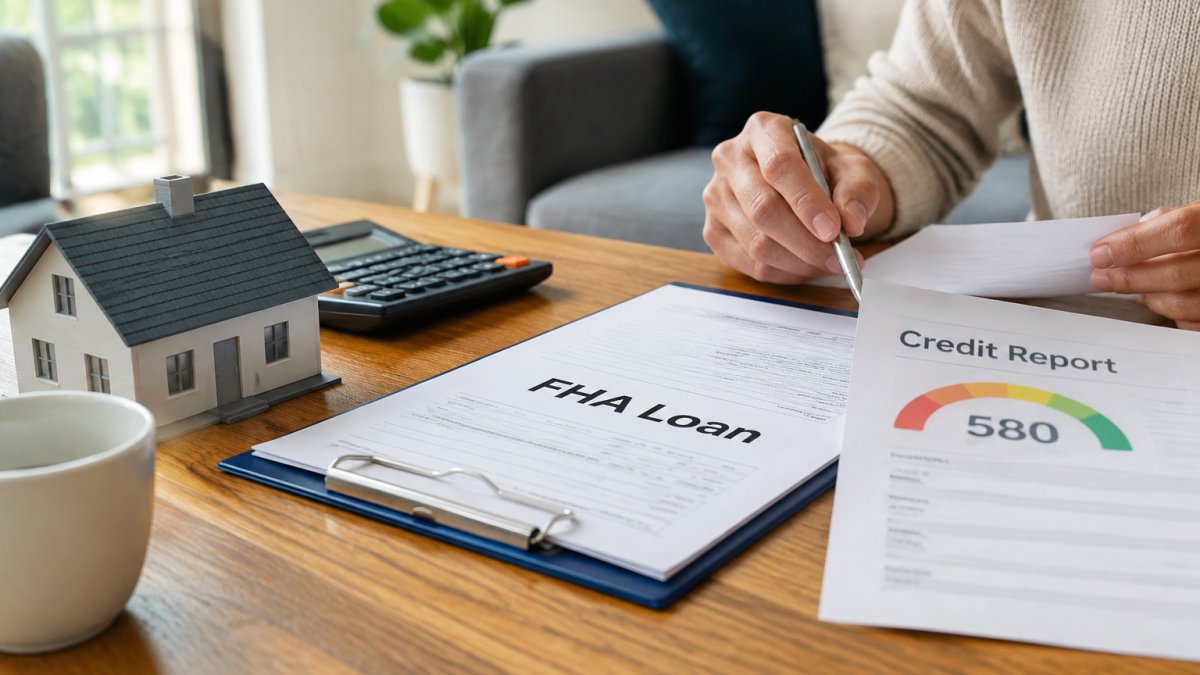
- Minimum credit score: Borrowers with a 580 or higher may qualify for the 3.5% down payment option under the federal FHA rules.
- Down payment: Borrowers with scores from 500 to 579 generally need at least 10% down.
- Debt-to-income ratio: Lenders review how much of your monthly income goes to debt payments.
Because these are federal minimums, individual lenders often set stricter standards. Keep that in mind as you read the rest of this guide.
Can You Qualify With a 500 Credit Score?
A 500 credit score is at the low end of what FHA accepts, but it is not impossible.
Many lenders set their own minimums above FHA's floor. Some will not accept scores under 580 at all, while others may.
Your score is only one part of the picture. Income stability, existing debts, and how you have handled recent payments also matter.
How Lender Overlays and Manual Underwriting Change the Answer
FHA sets the program rules. Lenders then add their own requirements, often called overlays. An overlay is a stricter standard a lender applies on top of FHA's minimums. Two lenders can look at the same borrower and reach different decisions.
Lenders review applications in one of two ways:
- Automated underwriting: A computer system reviews your credit and data and returns a decision.
- Manual underwriting: A human underwriter reviews your file in detail, especially when credit is weaker.
Manual underwriting can consider borrowers with thin or damaged credit. An underwriter may weigh compensating factors such as:
- A larger down payment or cash reserves
- A stable job history of several years
- A low housing payment compared to your current rent
- Savings that cover several months of mortgage payments
Ask lenders directly whether they use manual underwriting and what overlays apply.
Qualifying After Bankruptcy or Foreclosure
A past bankruptcy or foreclosure does not permanently close the door to an FHA loan, but the timing rules are stricter than many borrowers expect. FHA sets minimum waiting periods, and individual lenders frequently impose longer ones through overlays. Understanding how the clock is measured, and what underwriters want to see when it expires, is the difference between a clean approval and a stalled file.
How FHA Measures the Waiting Period
The waiting period generally starts from a specific event date, not the date you decided to file or the date you started missing payments:
- Chapter 7 bankruptcy: Waiting periods are measured from the discharge date under FHA's current rules.
- Chapter 13 bankruptcy: Timing depends on the case and FHA rules; confirm your specific eligibility with a loan officer. Some lenders require the case to be discharged or dismissed first.
- Foreclosure: Waiting periods are measured from the completion date under FHA's current rules.
Confirm the exact event date on your credit report and your court or county records before you apply. A one-month discrepancy in the discharge date can push your application past a lender's cutoff.
What Underwriters Look For After the Waiting Period
Satisfying the calendar is necessary but not sufficient. Underwriters reviewing a post-bankruptcy or post-foreclosure file typically want to see:
- Re-established credit: At least a few active accounts, a credit card, an auto loan, or a secured card, with a clean payment history since the event.
- Documented explanation: A written letter of explanation describing the cause of the bankruptcy or foreclosure, what changed, and why it is unlikely to recur. Vague explanations weaken the file.
- Stable income and reserves: Consistent employment and some cash reserves carry more weight when the credit history is thin or recently damaged.
- No new derogatory items: A single recent late payment after discharge can reset a lender's confidence, even if the FHA waiting period is satisfied.
Lender Overlays Can Extend the Wait
FHA's waiting periods are floors, not ceilings. Lenders may add their own seasoning requirements beyond FHA's minimums. Ask each lender directly: "What is your overlay on bankruptcy and foreclosure seasoning, and does it differ from FHA's minimum?" Comparing two or three lenders on this single question can save months.
Watch out: Do not assume every FHA-approved lender will accept FHA's minimum timeline; lender overlays vary.
Documentation to Have Ready
Gather these before you apply so the underwriter is not waiting on paperwork:
- Bankruptcy discharge papers or the court docket showing the discharge date
- Chapter 13 trustee payment history and court approval if the case is still active
- Foreclosure completion documentation from the county or servicer
- A written letter of explanation for the event
If your event is recent, a loan officer can map your specific dates against FHA minimums and common overlays so you know whether to apply now or wait.
Step-by-Step: How to Get Preapproved With Bad Credit
Most guides stop at "check your credit and talk to a lender." That advice is not wrong, but it is not a plan. For ways to lower upfront expenses, see ways to cut FHA closing costs in Florida. The sequence below is built for borrowers whose scores sit at or below FHA's floor, where small documentation and timing decisions have outsized effects on the outcome.

Step 1: Pull All Three Credit Reports and Dispute Errors First
Request your reports from AnnualCreditReport.com and review all three bureaus, because lenders may pull any of them. Look specifically for:
- Accounts that are not yours (identity mix-ups are common with common names)
- Late payments reported incorrectly
- Collections that were paid but still show a balance
- Duplicate collections for the same debt
Disputes can take time to resolve, so start this step before anything else. A corrected report can move a score enough to change which down-payment tier applies.
Step 2: Map Your Score to the Down-Payment Tier
FHA's structure ties the down payment to the score: 580 or higher generally qualifies for 3.5% down, while scores from 500 to 579 generally require 10% down. Calculate both scenarios against your target price so you know the real cash requirement before you shop. The difference between 3.5% and 10% down can be a large amount of cash, which changes which homes are realistic.
Step 3: Assemble Documentation Before You Talk to a Lender
Underwriters reviewing lower-score files ask for more, not less. Have these ready:
- Two years of tax returns and W-2s or 1099s
- Recent pay stubs covering at least 30 days
- Two months of bank statements for all accounts, including reserves
- Statements for any other debts (auto, student, personal loans)
Missing documents are the most common reason a preapproval stalls. A complete file also signals to the underwriter that the borrower is organized and low-risk.
Step 4: Compare Lenders on Overlays, Not Just Rates
FHA's minimums are the floor; each lender's overlays are the ceiling. Ask every lender the same three questions:
- What is your minimum credit score for an FHA loan, and does it differ from FHA's 500/580 tiers?
- Do you allow manual underwriting for borrowers below your automated cutoff?
- What are your overlays on debt-to-income ratio, reserves, and recent derogatory credit?
A lender that permits manual underwriting and has no score overlay above 580 may approve a borrower that a stricter lender declines, even though both are FHA-approved. Comparing overlays is the single highest-leverage step in this process.
Step 5: Get Preapproved, Then Protect the Approval
Preapproval is not the finish line. Between preapproval and closing:
- Do not open new credit accounts or finance furniture or appliances
- Do not change jobs without consulting your loan officer
- Keep documented reserves in place, underwriters may re-verify bank statements before closing
- Respond to underwriter conditions within a day or two; delays can expire rate locks
Watch out: A preapproval letter is not a commitment to lend. If your credit profile changes materially before closing, a new late payment, a new loan, a job change, the lender can re-underwrite and decline the file.
Step 6: Budget for Costs Beyond the Down Payment
Borrowers focused on the down payment often overlook the rest of the cash needed. Plan for:
- Upfront mortgage insurance premium: An upfront cost on FHA loans that can often be financed into the loan
- Annual mortgage insurance premium: Paid monthly, based on loan amount and term
- Closing costs: Covering lender fees, title, appraisal, and recording; ask your loan officer for the exact amount
- Cash reserves: Some lenders require one to two months of mortgage payments in reserve, especially on manual underwriting files
Ask your loan officer for a Loan Estimate early, it itemizes these costs and lets you compare lenders on total cash needed, not just rate.
Step 7: Get Preapproved and Start Shopping
With disputes resolved, documents assembled, and overlays compared, submit a full application. A preapproval based on a complete file, rather than a quick online estimate, carries more weight with sellers and reduces the chance of a surprise denial later in the process.
The steps below summarise the preapproval process for borrowers with lower scores, as covered in the guide.
| Step | What to do | Timing or detail |
|---|---|---|
| Pull all three credit reports | Review reports and dispute errors | Start first; disputes take time |
| Map score to down-payment tier | Calculate 3.5% or 10% down scenario | 580+ for 3.5%; 500-579 for 10% |
| Assemble documentation | Gather tax returns, pay stubs, bank statements | Two years of tax returns; 30 days of pay stubs |
| Compare lenders on overlays | Ask about minimum score and manual underwriting | Compare before choosing a lender |
| Get preapproved and protect it | Avoid new credit and job changes | Respond to conditions within a day or two |
| Budget for costs beyond down payment | Plan for mortgage insurance, closing costs, reserves | Request a Loan Estimate early |
| Get preapproved and start shopping | Submit a full application | Complete file carries more weight |
Your Next Step: Talk to a Jr Mortgage Loan Officer About Your Credit Profile
Every credit profile is different, so the right answer depends on your details. Our guide on how to choose a mortgage lender for your first home can help you compare your options before you call. Our team at Jr Mortgage can review your score, debts, and history to discuss which FHA options may fit. You can also explore how to qualify for FHA loans in Miami and how much down payment an FHA loan requires.
Frequently Asked Questions
What is the lowest credit score for an FHA loan?
HUD sets the baseline at a 580 credit score for the 3.5% minimum down payment, and a 500 to 579 score for a 10% down payment. Individual lenders often set higher minimums through their own overlays, so a score that meets HUD rules may still be declined by a specific lender. Check the lender's published minimum before you apply, and ask whether they use manual or automated underwriting for borrowers near the cutoff.
How much down payment do you need for an FHA loan with bad credit?
Borrowers with a credit score of 580 or higher can put down as little as 3.5 percent. Borrowers with scores from 500 to 579 generally need at least 10 percent down. On a $300,000 purchase, 10 percent is $30,000 before closing costs. Some lenders require a larger down payment for lower scores, so confirm the exact figure with your loan officer before you plan your savings.
Can you qualify for an FHA loan after bankruptcy?
Yes, but you must wait. For bankruptcy, FHA sets waiting periods that are measured from the discharge date or other qualifying event. Lenders may apply stricter rules, so ask for the specific timeline for your case.
How can you improve your chances of FHA approval with bad credit?
Start by pulling your credit reports from all three bureaus and disputing any errors. Pay down revolving balances to lower your credit utilization, avoid opening new accounts before applying, and keep current on every bill. Save documented cash reserves and gather two years of employment and income records. Compensating factors like reserves and stable income can help a manual underwriter approve a borrower whose credit alone falls short.